

Across the Gulf region, industries are changing how they pack, store, and move goods. For many years, cardboard was the first choice. It was cheap, light, and easy to find. But today, businesses are rethinking this option. Rising costs, harsh weather, and sustainability goals are pushing companies toward reusable packaging.
This shift is not sudden. It is the result of fundamental challenges faced by logistics, manufacturing, food, and retail sectors in the Gulf. Let’s explore why reusable packaging is becoming the more intelligent choice and how this change is shaping the future of industrial operations.
Why Cardboard Is Losing Its Place
Cardboard still has its uses, but it comes with limits, especially in Gulf countries.
Heat and Humidity Problems
The Gulf climate is hot and humid. Cardboard absorbs moisture easily. When exposed to heat, it loses strength. Boxes bend, tear, or collapse. This leads to damaged goods and safety risks.
Short Life Cycle
Most cardboard packaging is designed for one-time use. After a single trip, it is often thrown away. This creates high replacement costs and more waste.
Storage and Handling Issues
Cardboard does not stack well when it weakens. Warehouses face space problems. Workers also deal with frequent box failures, which slow down operations.
Because of these issues, many companies are looking for better options that can last longer and perform better.
What Is Reusable Packaging?
Reusable packaging includes containers made from durable materials like plastic. These containers are designed for repeated use over many cycles.
Common examples include:
- Plastic crates
- Heavy-duty pallets
- Pallet boxes
- Stackable bins
These products are strong, washable, and easy to handle. They fit well into modern supply chains.
Key Reasons Gulf Industries is Switching
1. Cost Savings Over Time
Reusable packaging may cost more at the start. But over time, it saves money. Instead of buying cardboard again and again, companies reuse the same containers for years.
Fewer replacements mean lower long-term costs. This is especially important for large-scale operations.
2. Better Protection for Goods
Plastic containers keep their shape. They protect products from impact, moisture, and dust. This reduces product loss and customer complaints.
For food, pharmaceuticals, and electronics, this protection is critical.
3. Improved Warehouse Efficiency
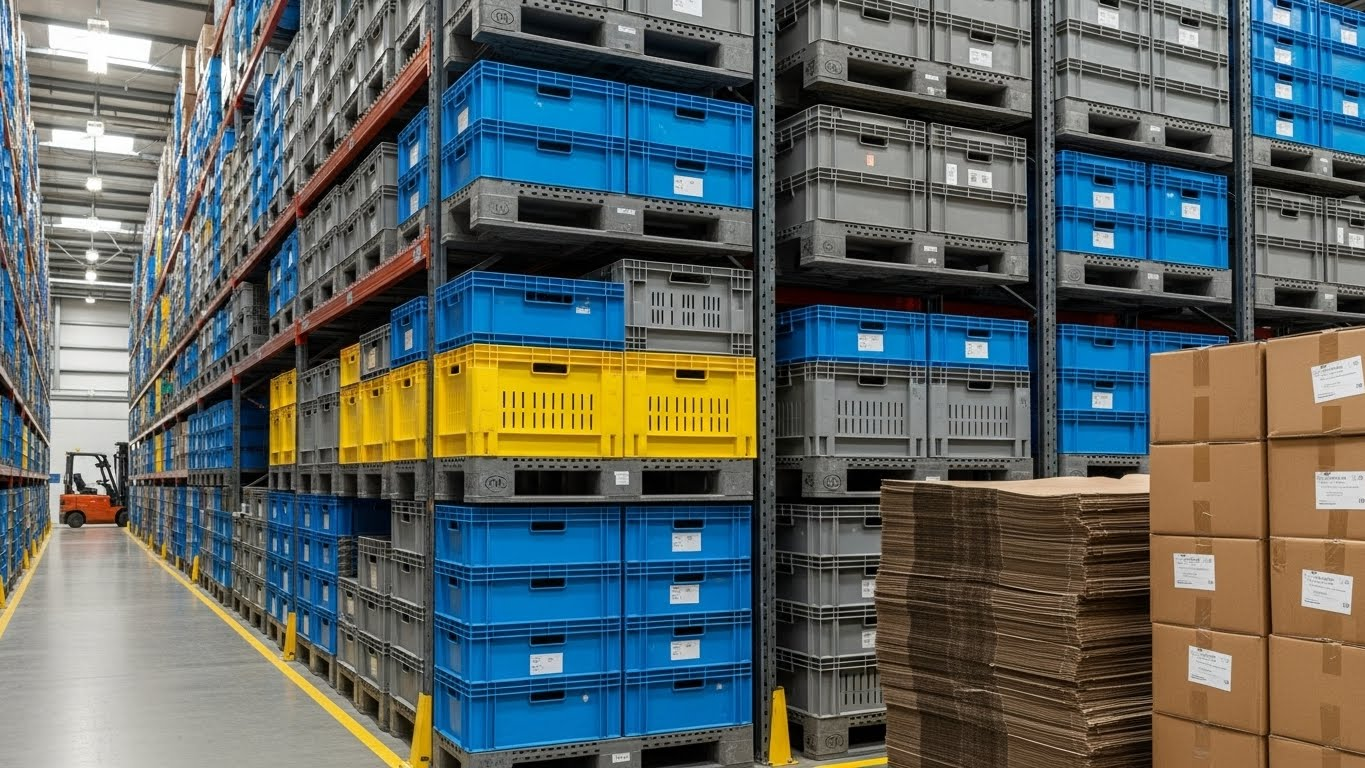
Reusable crates and pallets are designed to stack neatly. This helps warehouses use space better. It also makes loading and unloading faster.
Standard sizes improve automation and reduce errors.
4. Easier Cleaning and Hygiene
Unlike cardboard, reusable packaging can be washed and sanitized. This is very important for the food processing and healthcare industries.
Clean containers support safety standards and build trust with customers.
Sustainability Is a Major Driver
Sustainability is no longer optional. Gulf governments and businesses are setting clear environmental goals.
Reducing Waste
Cardboard creates large amounts of waste. Even when recycled, it still requires energy and water.
Reusable packaging reduces waste at the source. One crate can replace hundreds of cardboard boxes over its life.
Supporting Circular Economy Goals
Many Gulf countries are promoting circular economy models. Reuse fits perfectly into this idea. Products stay in use longer, and resources are used wisely.
Companies that adopt reusable packaging show responsibility and future-ready thinking.
Industry Sectors Leading the Change
Logistics and Warehousing: Logistics companies need strong packaging that survives many trips. Reusable crates and pallets reduce handling damage and speed up delivery.
Food and Agriculture: Fresh produce needs airflow and protection. Reusable plastic crates allow ventilation and easy cleaning. They also meet food safety rules.
Manufacturing: Factories move parts daily. Durable containers help keep production lines running smoothly without constant packaging failures.
Retail and Distribution: Retailers benefit from clean, uniform containers that move easily from warehouse to store.
The Role of Trusted Local Manufacturers
As demand grows, businesses prefer suppliers who understand regional needs. This is where companies like Crateco come into the picture.
Crateco has built a strong presence in the UAE by focusing on industrial-grade plastic solutions. Their product range includes crates, pallets, and handling systems designed for Gulf conditions. By offering durable and reusable options, they support businesses that want efficiency and sustainability.
Their experience with local industries helps companies move away from weak packaging choices and adopt long-term solutions.
After evaluating suppliers and product quality, many businesses choose a reliable plastic crate supplier in the UAE to support this transition smoothly.
Operational Benefits Beyond Packaging
Switching to reusable packaging is not just about boxes or crates. It improves the whole operation.
Faster Turnaround: Standard containers speed up sorting and transport. This reduces delays and improves delivery times.
Better Worker Safety: Strong containers reduce the risk of collapse and injury. Handles and ergonomic designs make lifting safer.
Brand Image Improvement: Customers notice responsible practices. Using reusable packaging shows care for quality and the environment.
Overcoming Common Concerns
Some businesses hesitate because of upfront costs or change management. These concerns are understandable.
Initial Investment: While reusable packaging costs more initially, the return on investment is clear over time. Many companies recover costs within months.
Storage of Empty Containers: Stackable and nestable designs reduce space needs when containers are not in use.
Process Changes: Most teams adapt quickly. Training is simple, and benefits are seen fast.
The Future of Packaging in the Gulf
The trend is clear. Reusable packaging is not a temporary shift. It is the future.
With rising e-commerce, stricter safety rules, and strong sustainability targets, durable packaging will continue to replace single-use materials.
Companies that adopt early gain an advantage. They reduce costs, improve efficiency, and align with regional goals.
Final Thoughts
Real needs drive the move from cardboard to reusable packaging in Gulf industries. Heat resistance, cost control, hygiene, and sustainability all play a role.
Reusable plastic solutions offer long-term value. They protect goods, support operations, and reduce waste.
By choosing experienced suppliers like Crateco and making smart packaging decisions, Gulf businesses are building stronger, cleaner, and more efficient supply chains for the future.