

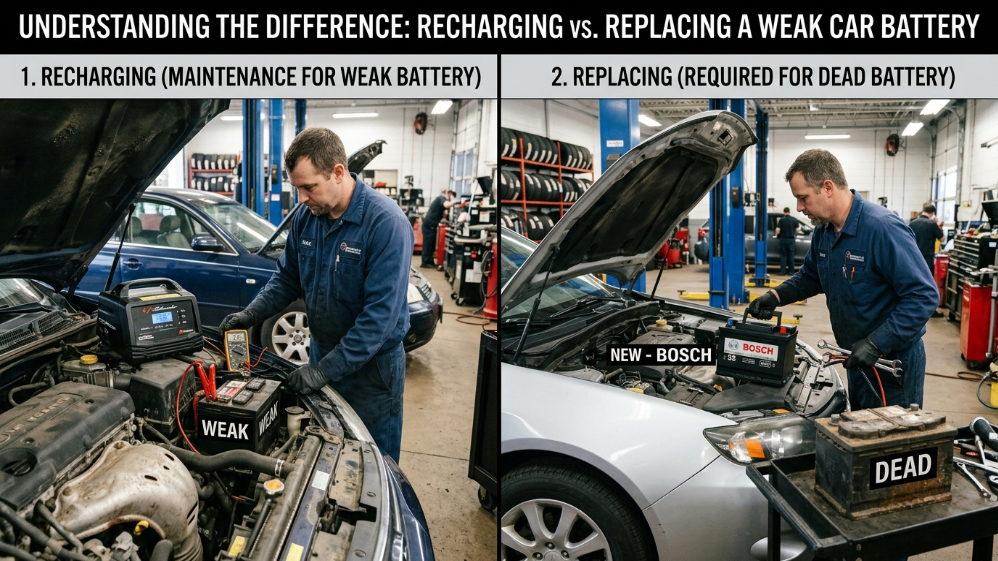
The Difference Between Recharging and Replacing a Weak Car Battery
Your car is slow to start, the lights look dim, and something just feels off. Before you panic or spend money on a new battery, it helps to know whether your battery simply needs a recharge or if it is time to replace it completely. Many drivers make the wrong call here, either wasting money on a new battery too soon or holding on to a dead one for too long.
Recharging brings a battery back to full power by putting electricity back into it, while replacing means removing the old battery and fitting a brand new one in its place. The right choice depends on the age of the battery, how much damage it has, and whether it can still hold a charge after being refilled. If the battery is old, badly worn, or keeps failing even after a recharge, that is a clear sign it needs to go.
For drivers looking for a quick and reliable solution, a professional car battery change in Dubai service can test your battery on the spot and tell you exactly which option makes more sense for your situation.
Recharging Vs. Replacing a Weak Car Battery: Detailed Comparison
What Does Recharging a Car Battery Actually Do?
Recharging a car battery means using an external charger or the car’s own alternator to push electrical energy back into the battery. Think of it like refilling a water bottle – the bottle is still the same, you are just putting more back in. When a battery gets drained from leaving lights on, short trips, or sitting unused for weeks, it often just needs a full charge to work properly again.
A standard battery charger connects to the terminals and slowly sends current into the cells over several hours. A healthy battery in good condition will absorb this charge and return to full capacity.
The main point here is “healthy”; recharging only works well when the battery’s internal parts are still in good shape and able to hold what is put back in.
What Does Replacing a Car Battery Mean?
Replacing a battery means removing the old one from the engine bay and installing a brand new battery in its place. This is not just a quick fix; it is a permanent solution that gives you a fresh start. A new battery comes with full capacity, clean terminals, and no old damage or wear inside.
Replacement is needed when the battery can no longer hold a charge at all, when it has physical damage like a cracked case or swollen sides, or when it has simply reached the end of its usable life. Most car batteries last between 3 and 5 years, depending on climate and usage.
In very hot regions, this lifespan can be even shorter because heat speeds up internal wear. At that point, no amount of recharging will bring it back to reliable performance.
Recharging vs Replacing: Side-by-Side Comparison
The table below breaks down the key differences between the two options to help you decide which one suits your situation.
| Factor | Recharging | Replacing |
| Cost | Low; only a charger or service fee | Higher cost of a new battery + fitting |
| Time Taken | 4 to 12 hours for a full charge | 30 to 60 minutes for a full swap |
| Best For | The battery drained from disuse or leaving lights on | Old, damaged, or failing battery |
| Battery Age | Works well on batteries under 3 years old | Recommended for batteries 3 years or older |
| Long-Term Fix | Temporary; may need to repeat over time | Permanent; fresh start with full capacity |
| Works On Dead Battery | Only if the battery still has good internal cells | Yes; works regardless of battery condition |
| Risk of Failure | Higher if the battery is already worn | Very low; the new battery is fully reliable |
| Requires Professional Help | Not always; DIY is possible with a charger | Recommended for correct fitment |
| Performance After | Returns to the previous level if cells are healthy | Full factory performance from day one |
| Ideal Situation | The car sat unused for weeks, or one-time deep drain | Slow starts, dim lights, battery over 3 years |
How to Know If Your Battery Just Needs a Recharge?
There are clear signs that a recharge is all your battery needs. If your car has been sitting in the garage for several weeks without being driven, the battery may have slowly lost its charge on its own.
This is called self-discharge, and it is completely normal. Similarly, if you accidentally left an interior light on overnight and the car would not start the next morning, the battery is not damaged; it is just empty.
Another good sign that recharging will work is if the battery is relatively new. A battery that is less than two years old and has no physical damage should bounce back well after a proper charge. If, after a full recharge, the car starts strong and runs without any warning lights, you are good to go.
Signs That Your Battery Needs to Be Replaced
Some problems cannot be fixed by recharging. Here are the most common signs that replacement is the only real solution:
- The battery is 3 to 5 years old or more. Age alone is enough reason to consider a swap, even if the battery still starts the car sometimes.
- It loses charge very quickly after being recharged. If you charge it fully and it drains again within a day or two without much use, the cells inside are too worn to hold power anymore.
- The engine cranks slowly even with a full charge. A weak, sluggish crank means the battery cannot deliver enough current to spin the engine properly.
- You see physical damage. A swollen case, cracks, or leaking acid are all signs of serious internal damage that cannot be repaired.
- The battery warning light stays on. This light on your dashboard often means the battery or charging system is not performing within normal limits.
- It has failed multiple times in a short period. One failure might be a fluke. Two or three failures in the same season mean the battery is at the end of its life.
Can You Recharge a Completely Dead Battery?
The short answer is: sometimes, but not always. A battery that has been fully discharged down to zero volts for a long period can suffer from a condition called deep sulfation, where hard crystals form on the internal plates and block them from accepting a charge.
In mild cases, a slow trickle charge over many hours can partially recover the battery. But in severe cases, the battery is too far gone, and no charger will bring it back to useful life.
Trying to force-charge a badly sulfated battery can even cause it to overheat or swell, which makes it unsafe. In these cases, replacement is the only safe and sensible choice.
Which Option Saves You More Money in the Long Run?
It might seem like recharging is always the cheaper option, but that is not always true. If your battery is already old and struggling, spending money on repeated recharges and service calls adds up quickly. You may pay for three or four recharge sessions over a few months and still end up needing a new battery in the end.
In contrast, replacing the battery once, with a good quality unit suited to your car and climate, means you are protected for the next three to five years without constant worry.
Recharging is cost-effective when the battery is young and healthy. Replacement is the smarter investment when the battery is aging or already damaged.
What a Professional Battery Test Can Tell You?
Before making any decision, getting a professional load test done on your battery is the smartest first step. A load test checks how much power the battery can actually deliver under real conditions, not just what the voltage reads when nothing is running.
A fully charged battery might show a good voltage reading but still fail a load test, which means it looks fine on the surface but cannot handle the demands of starting an engine or running electronics.
Most reputable battery shops and service providers can do this test in just a few minutes. The result will tell you clearly whether a recharge will do the job or whether replacement is the right move.
Conclusion
Recharging and replacing a car battery are two very different solutions for two very different problems.
Recharging works well for a young, healthy battery that has simply lost its charge from disuse or an accidental drain. Replacing is the right call when the battery is old, physically damaged, or unable to hold a charge after being refilled.
The comparison table in this article is a quick reference to help you match your situation to the right fix. When in doubt, always get a professional load test first – it takes only minutes and removes all the guesswork.
A little knowledge now can save you from being stranded later.